
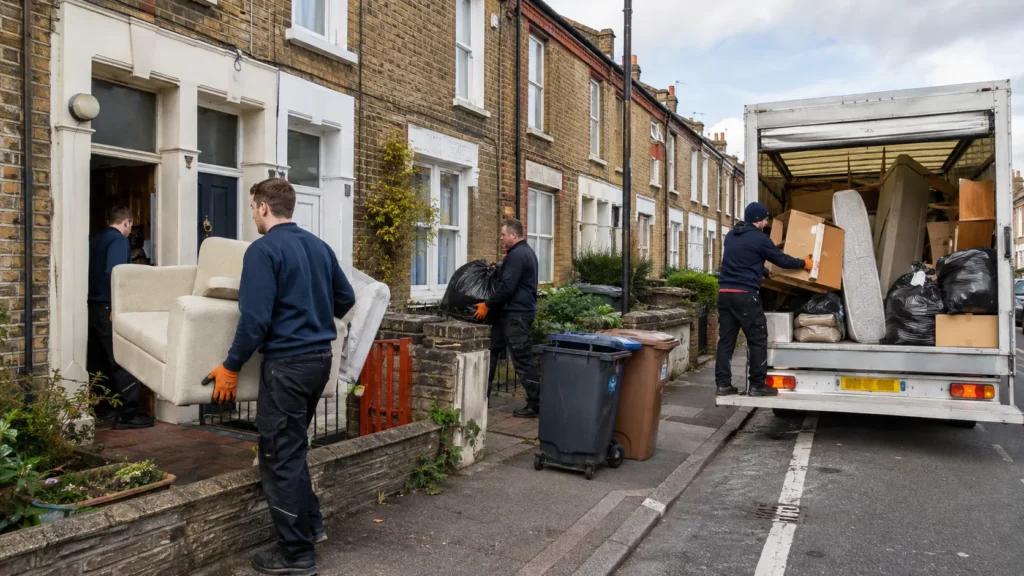
The end of a tenancy can produce more waste than expected. Old furniture, mattresses, broken appliances, packaging and general household clutter may remain after a tenant moves out.
If these items are not removed promptly, they can delay cleaning, repairs, inspections and the start of a new tenancy.
Tenants are normally expected to remove their possessions and return the property in the condition required by their tenancy agreement, allowing for fair wear and tear.
Landlords must also act carefully when dealing with belongings left behind, as not everything remaining in the property can automatically be treated as rubbish.
This guide explains how end-of-tenancy rubbish removal works in Croydon and what landlords, tenants and letting agents should consider before arranging a clearance.
What Is End-of-Tenancy Rubbish Removal?
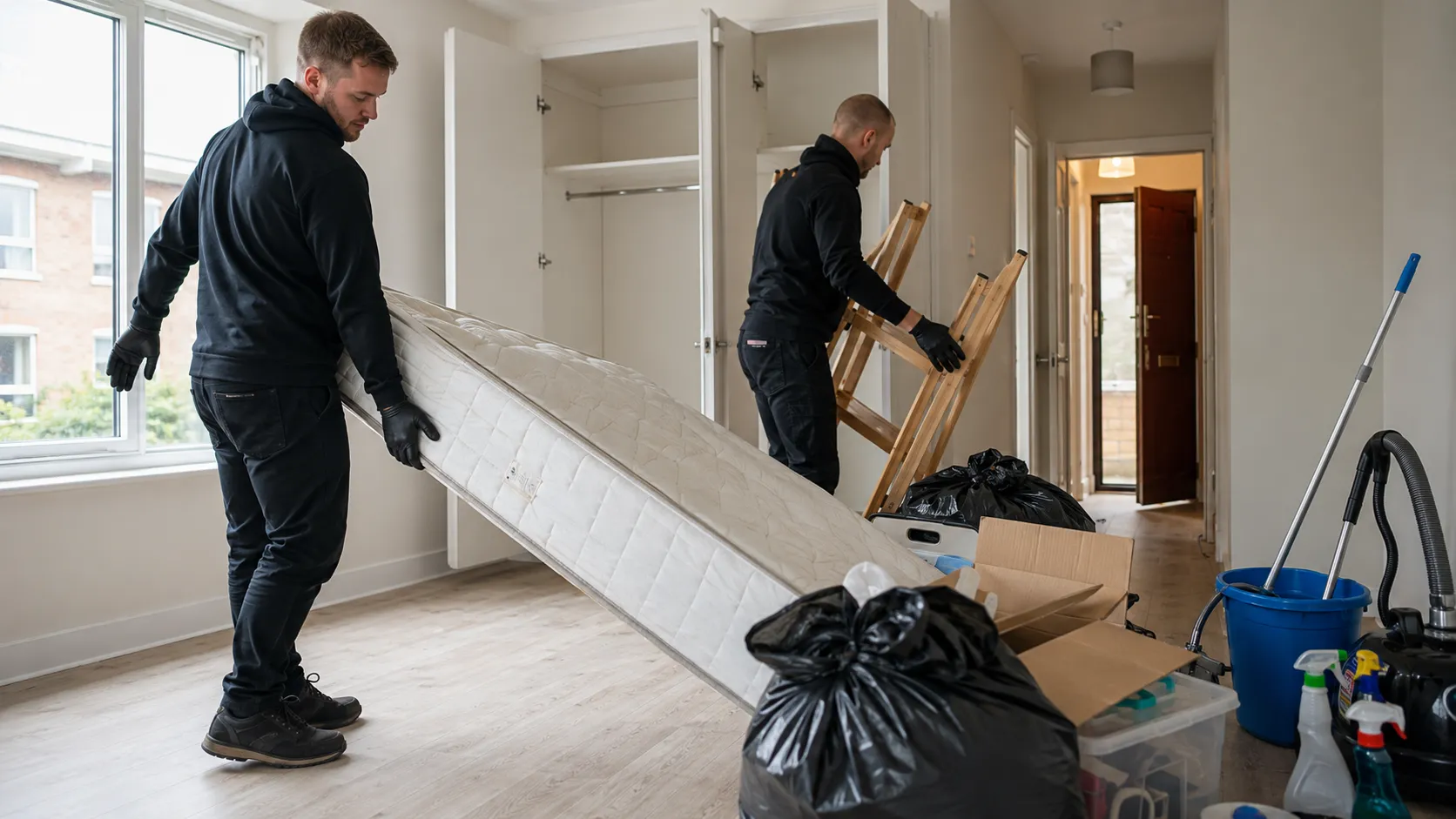
End-of-tenancy rubbish removal is a clearance service for rented houses, flats, maisonettes and shared properties after an occupier moves out.
A typical clearance may include:
- Bagged household rubbish
- Unwanted furniture
- Sofas and armchairs
- Beds and mattresses
- Broken or disconnected appliances
- Boxes and packaging
- Kitchen and bathroom items
- Garage, loft or garden waste
- Items left inside cupboards or storage areas
Rubbish removal is different from professional cleaning. A clearance team removes and transports unwanted items, while a cleaning company deals with surfaces, flooring, stains and sanitation.
Where both services are required, the rubbish should normally be removed first. This allows cleaners, decorators and maintenance contractors to access the property properly.
Who Is Responsible for Removing the Rubbish?
Responsibility may depend on the tenancy agreement, the circumstances in which the tenancy ended and who owns the items left behind.
Tenants should remove their possessions and unwanted waste before returning the keys. Leaving rubbish, furniture or appliances in the property may create additional costs and could affect the return of the tenancy deposit.
A landlord or letting agent may need to arrange a clearance where:
- The tenant has confirmed that the remaining items are unwanted.
- The tenancy has ended and rubbish has been left behind.
- Cleaning or repair work cannot begin until the property is cleared.
- The correct process has been followed for abandoned possessions.
- Clearance costs may need to be considered as part of a deposit claim.
Landlords should not automatically assume that every item remaining in the property has been abandoned. Documents, electronics, furniture and personal belongings may still belong to the former tenant.
What Should Tenants Do Before Moving Out?

Planning the clearance early can help tenants avoid last-minute problems and disagreements.
Check the Tenancy Agreement and Inventory
The tenancy agreement may explain how the property should be returned and whether all personal belongings must be removed.
Tenants should also check the original inventory before discarding furniture or appliances. Some items may belong to the landlord and must remain at the property.
Separate Possessions From Rubbish
Before arranging a collection, items should be divided into clear groups:
- Belongings going to the new home
- Items suitable for donation or reuse
- Recyclable materials
- Bulky waste requiring collection
- General household rubbish
- Hazardous or specialist waste
Separating items reduces the risk of something valuable being removed accidentally and makes it easier to obtain an accurate quotation.
Book the Collection in Advance
Leaving rubbish removal until the final day of the tenancy can be risky. A suitable vehicle or collection team may not be available at short notice, especially when several bulky items are involved.
Booking early also leaves time for cleaning and a final inspection after the waste has been removed.
Photograph the Cleared Property
Tenants should take dated photographs after the clearance is complete. Images of each room, cupboard and storage area can provide useful evidence of the property’s condition when the keys are returned.
What Should Landlords Do Before a Clearance?
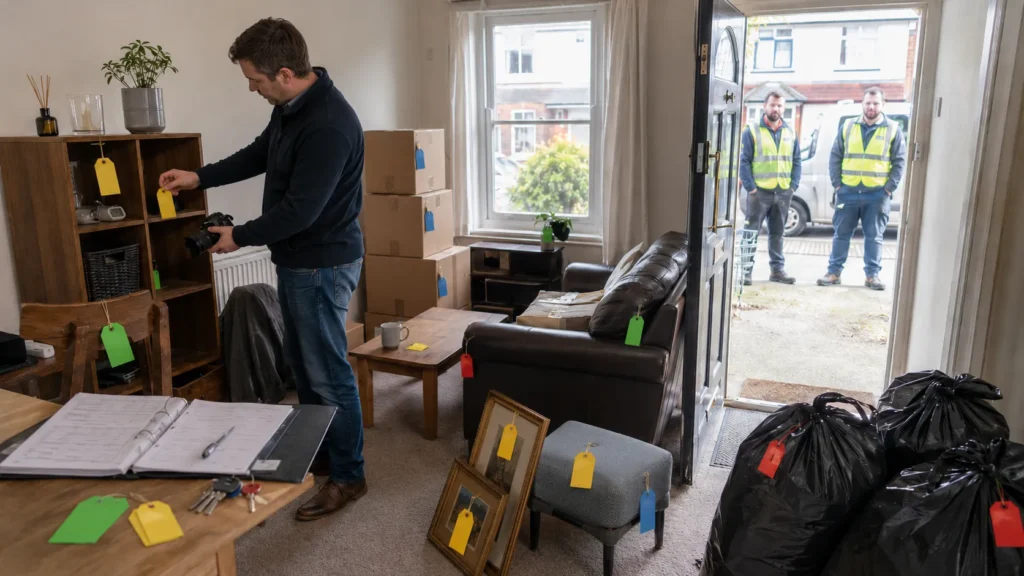
Landlords and letting agents should document the condition of the property before authorising the removal of any items.
Confirm That the Tenancy Has Ended
A tenant’s unexplained absence does not necessarily mean that the tenancy has ended or that the property has been surrendered.
Before entering, changing locks or removing belongings, a landlord should establish that the tenancy has legally ended. Where the position is unclear, professional legal advice may be required.
Conduct a Check-out Inspection
The property should be compared with the original inventory and schedule of condition.
The check-out report should record:
- Items left in each room
- The general condition of the property
- Damage beyond fair wear and tear
- Missing landlord-owned items
- Keys that have or have not been returned
- Rubbish requiring removal
- Cleaning and repair work required
Dated photographs should support the written report.
Contact the Former Tenant
Where ownership of an item is uncertain, the landlord should attempt to contact the former tenant using the available telephone number, email address or forwarding address.
Communications should identify the belongings and explain how the former tenant can collect them. Copies of messages, letters and attempted calls should be retained.
Can a Landlord Dispose of Belongings Left Behind?
Not immediately in every case.
Items do not automatically become the landlord’s property when a tenancy ends. A landlord who takes control of belongings left behind may have legal responsibilities under the Torts (Interference with Goods) Act 1977.
The appropriate process may depend on whether the former tenant can be contacted, the apparent value of the items and the wording of the tenancy agreement.
Clearly worthless household waste may be treated differently from jewellery, important documents, electronic equipment, furniture or personal possessions. Where there is uncertainty, legal advice should be obtained before items are sold, donated or disposed of.
A clearance company should only be instructed to remove items that the customer is legally entitled to discard.
Can Rubbish Removal Costs Be Deducted From the Deposit?
A landlord may propose a deposit deduction where a tenant has breached the tenancy agreement and caused a genuine financial loss. However, the deduction must be reasonable and supported by evidence.
Useful evidence may include:
- The tenancy agreement
- The signed inventory
- Check-in and check-out reports
- Before-and-after photographs
- Messages exchanged with the tenant
- Clearance quotations
- Invoices and receipts
The deposit remains the tenant’s money until both parties agree to the deductions or a dispute is decided through the relevant tenancy deposit protection scheme.
Fair wear and tear must also be distinguished from rubbish, avoidable damage and failure to meet an obligation in the tenancy agreement.
How Does an End-of-Tenancy Clearance Work?
A professional clearance usually follows several straightforward steps.
1. Provide the Property Details
The customer provides the collection address, property type, floor level and information about parking, stairs, lifts and access restrictions.
2. Describe the Waste
Photographs and an itemised list help the company estimate the vehicle space, labour and disposal requirements.
Heavy materials, large appliances and dismantling requirements should be mentioned in advance.
3. Receive a Quotation
The quotation should explain what is included, such as lifting, loading, transport and disposal.
Customers should ask whether extra waste, difficult access or waiting time could affect the final price.
4. Prepare the Property
Items that must remain should be separated clearly from the rubbish. Valuable belongings, medication, keys, identity documents and electronic devices should be removed before the team arrives.
5. Complete the Collection
Where furniture, mattresses and household rubbish must be carried from inside the property, an end-of-tenancy rubbish removal service in Croydon can handle the lifting, loading and transportation.
6. Inspect the Property
The landlord, tenant or letting agent should check all rooms, cupboards and storage areas before the team leaves.
What Affects the Cost of a Clearance?
The cost varies according to the quantity of waste and the work required.
| Cost factor | How it affects the job |
| Waste volume | Larger loads require more vehicle space |
| Weight | Heavy items may require additional labour |
| Number of bulky items | More items increase loading time |
| Floor level | Upper floors can make removal more difficult |
| Lift availability | A working lift may reduce carrying time |
| Parking distance | Long carrying distances extend the job |
| Dismantling | Large furniture may need to be taken apart |
| Waste type | Some materials require different disposal routes |
| Urgency | Short-notice collections depend on availability |
Providing clear photographs and accurate access information helps the company prepare a more reliable quotation.
Can Croydon Council Collect End-of-Tenancy Items?
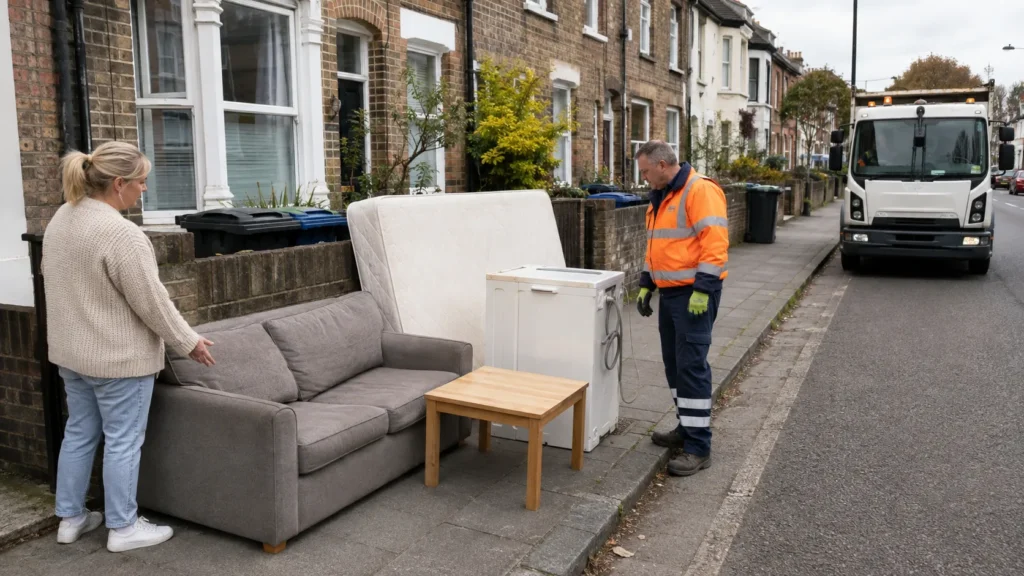
Croydon Council provides a paid bulky-waste collection service for certain large household items, including sofas, mattresses, beds, tables and some appliances.
This may be suitable where a tenant only has a small number of accepted items and can place them at the required external collection point.
A private clearance may be more practical where items must be carried from inside, several rooms need clearing or the waste includes a mixture of furniture, bags and other materials.
Residents should check the council’s current prices, item limits and collection rules before booking.
End-of-Tenancy Clearance Checklist
Before arranging a collection, confirm that:
- The tenancy has ended or access has been authorised.
- Personal belongings have been separated from rubbish.
- Ownership of the remaining items is clear.
- The inventory and property condition have been recorded.
- Photographs have been taken.
- Hazardous materials have been identified.
- Parking, stairs and access have been explained.
- The quotation includes labour, transport and disposal.
- A receipt or collection record will be provided.
- The waste collector is properly registered.
Final Thoughts
A well-organised end-of-tenancy clearance helps tenants return a property properly and allows landlords to begin cleaning, repairs and remarketing without unnecessary delays.
Tenants should arrange waste removal before returning the keys and avoid discarding landlord-owned items.
Landlords should confirm that the tenancy has ended, document the property carefully and distinguish genuine rubbish from possessions that may still belong to the former tenant.
Using an authorised waste collector, retaining evidence and following a clear process can reduce disputes while ensuring that the property is prepared safely and responsibly for its next occupant.