
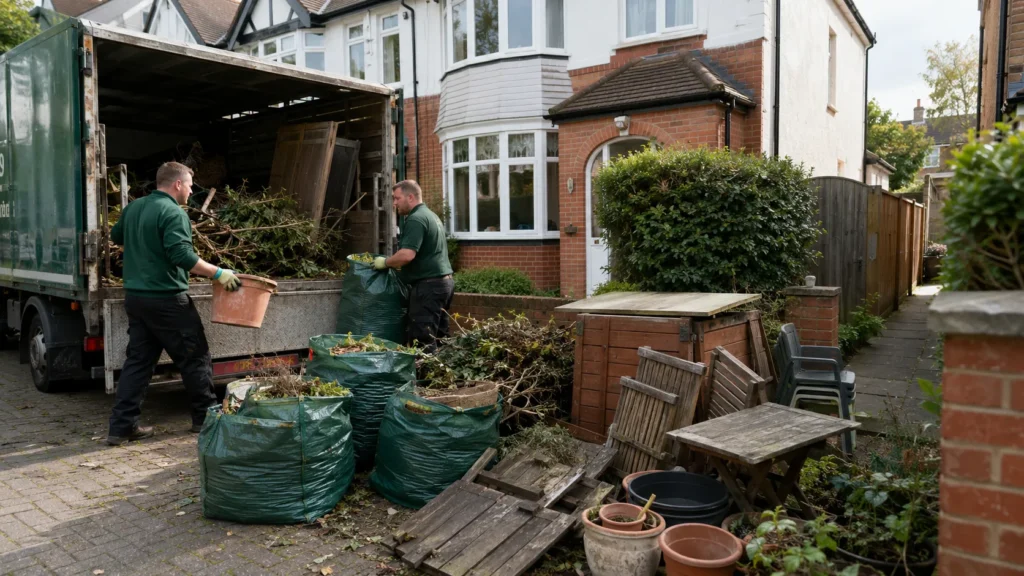
Garden maintenance can create a surprising amount of waste. Grass cuttings and fallen leaves may fit inside a garden waste bin, but soil, broken fencing, old garden furniture and dismantled sheds often require a different collection method.
Choosing the correct disposal route depends on the type, volume and weight of the waste.
Croydon residents may be able to compost suitable material at home, subscribe to the council’s garden waste service, visit a reuse and recycling centre or arrange a private garden clearance.
This guide explains what can usually be collected, which materials require special handling and how to prepare outdoor waste for removal.
What Counts as Garden Waste?
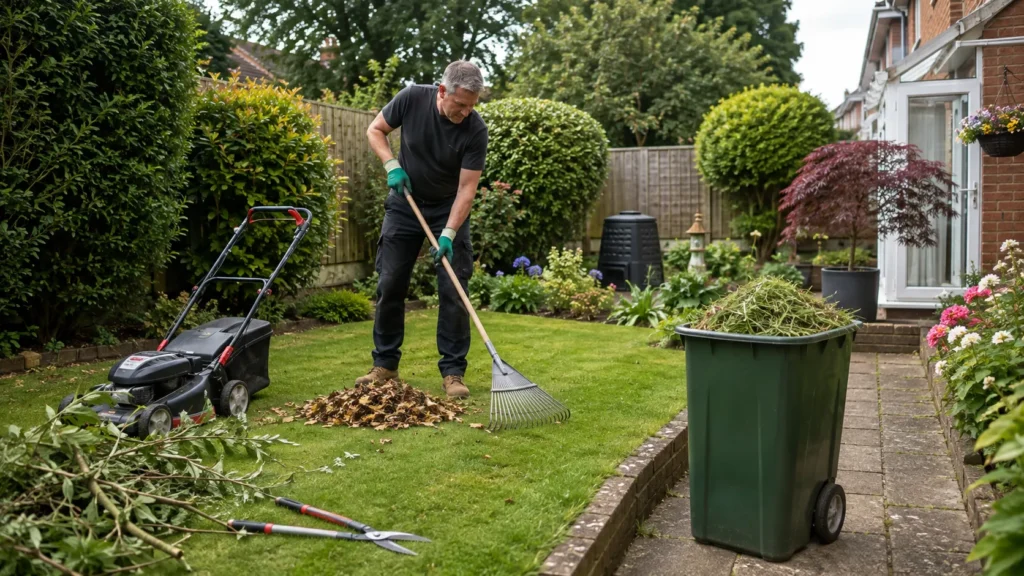
Garden waste generally means biodegradable material produced through gardening, pruning, landscaping and routine outdoor maintenance.
Common examples include:
- Grass and hedge cuttings
- Leaves and fallen flowers
- Plants and weeds
- Twigs and small branches
- Fallen fruit
- Turf and small amounts of soil
- Garden furniture
- Plant pots and containers
- Fencing and decking
- Broken garden storage
- Shed contents
- General outdoor clutter
Not all these materials can be placed in a council garden waste bin. Some are too large or heavy, while others require separate recycling or disposal arrangements.
What Can Go in a Croydon Garden Waste Bin?
Croydon Council operates a paid garden waste collection service for eligible households. It currently provides 26 fortnightly collections over a 12-month subscription period.
The council states that its garden waste bins can be used for:
- Grass cuttings
- Hedge clippings
- Leaves
- Plants
- Ordinary garden weeds
- Twigs and sticks
- Fallen fruit
- Flowers and houseplants
- Small branches no longer than 30 centimetres
Everything must fit inside the bin with the lid fully closed. Waste placed beside or on top of the bin may not be collected.
The service is available to households that receive their own individual bins. Croydon Council says it is not available to properties using shared or communal rubbish bins, such as some blocks of flats.
Prices and collection conditions can change, so residents should check the council’s current terms before subscribing or renewing.
What Cannot Go in the Garden Waste Bin?
A garden waste bin is intended for loose, biodegradable plant material. It should not be used as a general outdoor rubbish bin.
Materials that should be kept separate include:
- Soil, earth and stones
- Rubble and broken tiles
- Plant pots
- Plastic garden products
- Treated or painted timber
- Fencing panels
- Decking boards
- Garden furniture
- Tools and electrical equipment
- Food waste
- General household rubbish
- Large branches and tree stumps
- Japanese knotweed
Japanese knotweed must not be placed in an ordinary garden waste bin. It is an invasive plant subject to specific handling and disposal controls, so specialist advice may be necessary.
Residents should avoid mixing soil, rubble or household rubbish with green waste. Contamination can make recycling and composting more difficult and may result in the collection being refused.
What Can a Private Garden Clearance Collect?
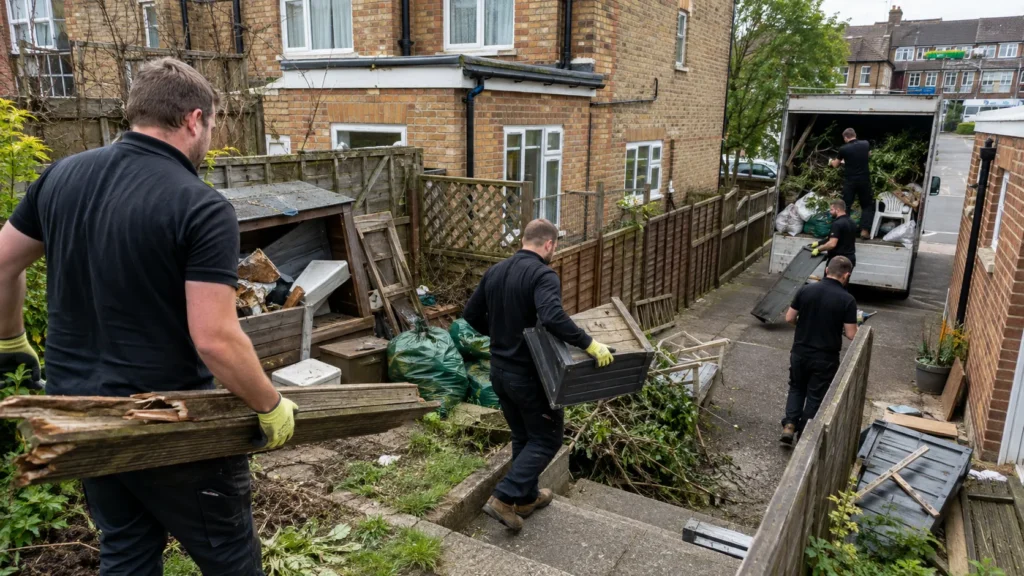
A private garden clearance is generally more suitable when the waste is too bulky, heavy or mixed to fit into a council bin.
Depending on the company’s services and the agreed quotation, a collection may include:
- Bagged grass, leaves and hedge cuttings
- Branches and pruning waste
- Plants and turf
- Soil
- Broken fencing
- Decking boards
- Garden furniture
- Barbecues and outdoor equipment
- Plant pots
- Damaged storage boxes
- Dismantled sheds
- Timber and shelving
- General outdoor rubbish
A professional garden waste removal service in Croydon may also provide the lifting, loading and transportation, which can be helpful when the waste is at the back of a property or too heavy to move without assistance.
Customers should describe all materials accurately. Green waste, soil, rubble, timber and bulky furniture may be charged differently because they have different weights and disposal requirements.
Can Soil and Turf Be Collected?
Soil and turf can be collected by some private waste companies, but they should always be declared before the quotation is confirmed.
Even a relatively small pile of wet soil can be extremely heavy. Its weight affects the amount a vehicle can legally carry and may increase labour and disposal costs.
Customers should explain:
- The approximate volume
- Whether the soil is loose or bagged
- Whether it is wet or dry
- How far it must be carried
- Whether steps or narrow access are involved
- Whether the soil is mixed with rubble or other waste
Soil should not be hidden underneath bags of lighter garden waste. Undeclared heavy material may cause the quotation to change when the collection team arrives.
Can Branches and Hedge Cuttings Be Removed?
Yes. Branches, hedge cuttings and pruning waste are common parts of a garden clearance.
Small branches may fit into Croydon Council’s garden waste bin, provided they meet the council’s size rules and the lid can close. Larger branches may need to be cut down, bundled or collected separately.
Preparing branches before collection can make loading safer and faster. Sharp ends should not protrude from bags or create a hazard on paths and pavements.
Tree trunks and large stumps require special attention because of their size and weight. Croydon Council lists tree stumps among the materials residents may take to a reuse and recycling centre rather than presenting through its bulky-waste collection.
Can Old Fencing and Decking Be Collected?
Broken fence panels, posts, gates and decking can often be removed through a private clearance, but they do not count as ordinary green garden waste.
The customer should state whether the timber is:
- Painted or treated
- Attached to concrete posts
- Mixed with nails or screws
- Wet or rotten
- Already dismantled
- Combined with soil or rubble
Protruding nails should be made safe where possible. Fence panels and long decking boards may need to be cut into manageable sections before they can be loaded.
Removal and dismantling are not always the same service. Customers should confirm whether the quotation covers collecting dismantled materials only or taking the structure apart as well.
Can Garden Furniture Be Removed?
Most private clearance companies can assess unwanted garden furniture for collection.
Common items include:
- Outdoor tables and chairs
- Benches
- Sun loungers
- Parasols
- Plastic storage boxes
- Children’s outdoor furniture
- Barbecue stands
- Damaged planters
- Garden ornaments
Furniture made from mixed materials may need to be separated during processing. Metal, timber and some plastics may be suitable for recycling, depending on their condition and the facilities available.
Where furniture remains usable, donation, resale or reuse may be preferable to disposal.
What About Shed Clearance and Removal?
A shed clearance may involve removing its contents, dismantling the structure or both.
Typical shed contents include:
- Garden tools
- Timber and shelving
- Storage boxes
- Plant pots
- Furniture
- Metal objects
- Old decorating materials
- General household clutter
Before arranging a clearance, the owner should check carefully for hazardous or restricted items. Paint, varnish, chemicals, fuel, pesticides, gas cylinders and asbestos-containing materials should not be mixed with general waste.
A complete shed dismantling usually requires photographs, measurements and information about the materials used.
The customer should also explain whether electricity has been disconnected and whether the structure is attached to concrete foundations.
Council Collection, Recycling Centre or Private Removal?
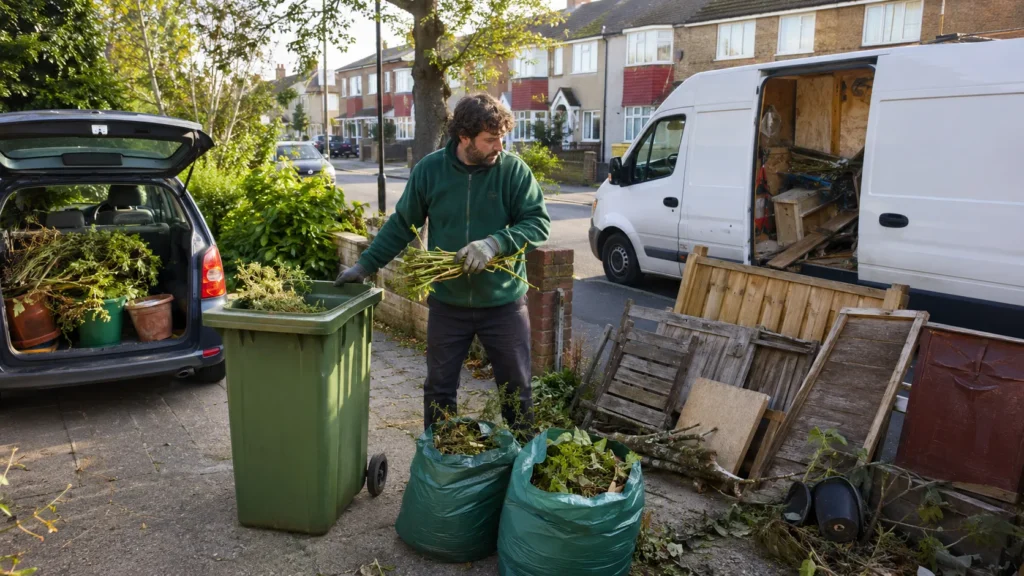
The right option depends on the waste involved.
| Disposal option | Most suitable for |
| Home composting | Leaves, grass and suitable plant material |
| Council garden waste bin | Regular quantities of accepted green waste |
| Reuse and recycling centre | Residents with transport and correctly sorted waste |
| Private garden clearance | Bulky, heavy or mixed outdoor waste |
| Specialist contractor | Hazardous waste, asbestos or invasive plants |
Croydon’s reuse and recycling centres accept a range of recyclable materials and household waste, although vehicle, permit and site rules may apply.
Residents should check the current opening hours and acceptance conditions before travelling.
How Much Does Garden Waste Removal Cost?
The cost of a private garden clearance depends on the quantity and type of material rather than the size of the garden alone.
Important pricing factors include:
- Total volume of waste
- Approximate weight
- Amount of soil or rubble
- Number of bulky items
- Distance from the garden to the vehicle
- Stairs, alleyways and narrow access
- Dismantling requirements
- Labour and loading time
- Specialist disposal charges
- Urgency of the collection
Photographs can help a company assess the job, but the images should show the full pile rather than only the top layer.
How Should Garden Waste Be Prepared?
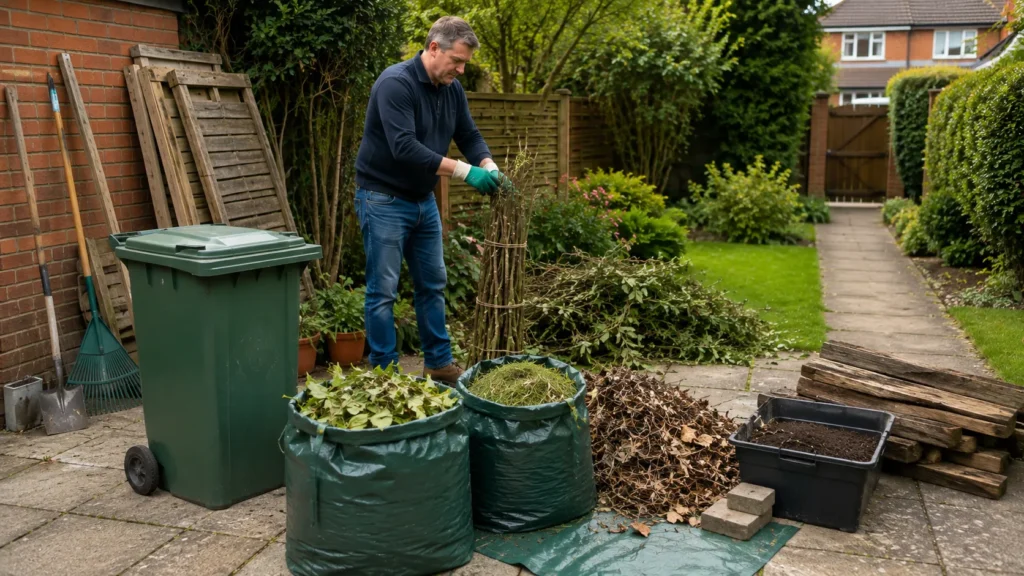
Good preparation helps the collection run efficiently.
Customers should:
- Separate green waste from soil, rubble and general rubbish.
- Bag loose leaves and grass where requested.
- Bundle branches into manageable lengths.
- Identify heavy, sharp or hazardous materials.
- Move vehicles that may obstruct access.
- Explain whether the waste must be carried through the house.
- Keep items that must remain clearly separated.
- Avoid placing waste on a public pavement without permission.
Customers should not overload bags. A bag that is too heavy to lift safely may need to be divided before collection.
Check Who Takes the Waste
Householders have a duty to take reasonable steps to ensure their rubbish is transferred to an authorised person.
Before using a private collector, residents should check the Environment Agency’s public register of waste carriers, brokers and dealers. The register can be searched by business name, postcode or registration number.
Customers should also retain the quotation, receipt and registration details. Unusually cheap anonymous offers should be treated cautiously, particularly when the collector cannot explain where the waste will be taken.
Final Thoughts
Croydon residents have several options for dealing with garden waste. Routine grass cuttings, leaves and small branches may suit the council’s subscription service, while composting can reduce the amount requiring collection.
Private clearance is often more practical for soil, fencing, decking, furniture, shed contents and larger quantities of mixed outdoor waste. Hazardous substances and invasive plants require separate, specialist handling.
Before booking, the customer should separate the materials, provide accurate photographs, explain access conditions and verify that the waste collector is properly registered.
Taking these steps helps the clearance proceed safely while reducing the risk of fly-tipping or unexpected charges.